Because another wine food and travel blog was way too long.
|
|
To Hell with States’ Rights! – Part I
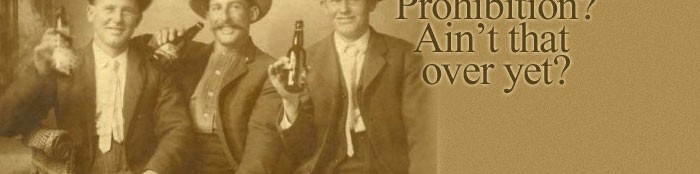
There are a number of states that make it next to impossible for a consumer to get wine direct-shipped to her. Most states enact and maintain these laws purportedly to keep alcohol out of the hands of “minors” — although there are no laws against kids under 21 being targeted by military recruiters — which is why the legal drinking age went down during the Vietnam War — to 18 in a number of states — but back up to 21 in order for the states to be eligible for federal highway funds. Most of these laws effectively protect the three-tiered system, that takes wine from the winery, to the distributor, to the retail establishment. And I would argue that there is a pretty strong lobby that seeks protectionism for its state-run wineries, and its distribution system. It would seem to me that any Constitutional lawyer could argue these laws were in violation of the Commerce Clause. But Joe, who spent a great deal of time arguing with my fellow law students while I was in law school, pointed to Prohibition as the culprit. And upon further review, I believe he’s right. (Just don’t tell him I said so!) Prohibition in the United States While the Eighteenth Amendment immediately comes to mind when one talks about Prohibition, the real culprit was an Ohio attorney and lobbyist named Wayne B. Wheeler. A Lyndon Johnson-type power broker, Wheeler was head of the National Anti-Saloon League, a “temperance” organization that used grassroots organizing with its entire mission being the prohibition of alcohol. Focusing on the extensive use of churches to seize political power, the League supported or opposed candidates entirely based on their position regarding prohibition and nothing else. It completely disregarded their political party affiliation or position on other issues. Wheeler was truly the Jack Abramoff of his era:
Wheeler authored The Volstead Act, named after Andrew Volstead, Head of the House Judiciary Committee which combined with the Eighteenth Amendment, made “intoxicating liquors” excluding those used for religious purposes and sales throughout the United States, prohibited. The law was vetoed by President Woodrow Wilson, but passed on the same infamous day, October 28, 1919. Except for Home Brew — Zinners Rejoiced! Section 29 of the Volstead Act allowed 200 gallons (the equivalent of about 1000 standard 750 ml bottles) of “non-intoxicating cider and fruit juice” to be made each year at home. Initially “intoxicating” was defined as anything over 0.5%, but the Bureau of Internal Revenue soon struck that down and this effectively legalized home wine-making. Some vineyards embraced the sale of grapes for making wine at home; Zinfandel grapes were popular among home wine makers living near the vineyards. The Eighteenth Amendment Combined with the Volstead Act, which defined “intoxicating liquors” was the Eighteenth Amendment, ratified on January 16, 1919. Here’s the text of the first and only Amendment to date that has been repealed:
Too bad 36 states decided to ratify the amendment prior to certification. The following states ratified the amendment:
The following state rejected the amendment:
The following states have not ratified the amendment:
The Eighteenth Amendment went into effect one year later on January 29, 1920. (As you can see from the list, some state legislatures had already enacted statewide prohibition prior to the ratification.) It was too bad, because what resulted was the steep escalation of organized crime. Production, importation and distribution of alcoholic beverages — once legitimate business activities — were taken over by criminal gangs, who fought each other for market control in violent confrontations which often included mass murder. Gangsters like Chicago’s Al Capone became rich and were admired, effectively celebrating criminals as national celebrities. Enforcement was difficult because the gangs’ wealth made it easy for them to bribe underpaid and understaffed law-enforcement personnel as well as hire top attorneys. Many citizens were sympathetic to bootleggers; and respectable citizens frequented illegal speakeasies. Loosening of social mores during the 1920s led to the popular cocktail and the cocktail party among higher socio-economic groups. Those do-gooders so inclined to assist authorities were often intimidated, maimed or even murdered.
Prohibition lost advocates as alcohol became more socially accepted. The public clearly recognized prohibition as the culprit in the growth of organized crime. By 1933, public opposition to prohibition had become overwhelming. Stay tuned. In Part II we’ll discuss the repeal of the Eighteenth Amendment; the long-lasting consequences of the language used in the text of the Twenty-First Amendment, and its affect on direct shipping from out-of-state wineries and retailers. Cheers! Amy Corron Power,
Page 1 of 0
|